Choosing a Durable Metal Coating for Pearland's Climate and Your Project Needs
Living in the Houston Bay Area means dealing with humidity, heat, and the occasional coastal storm that can take a toll on anything made of metal. Whether you maintain automotive parts, run industrial equipment, or look after residential metalwork around your home in Pearland, finding a durable metal coating is not a luxury. It is a necessity. I have spent years working with various finishes, and I have learned that the difference between a coating that lasts and one that fails often comes down to how well the process matches the environment and the metal itself.
When I first moved my shop to this area, I quickly realized that standard paints would not hold up. A neighbor brought in a wrought-iron gate that had been painted less than a year earlier. The rust was already bubbling through. That gate needed sandblasting to remove the old layers, then a proper coating that could handle the humidity. That experience taught me that surface preparation is not just a step. It is the foundation of any lasting finish. Without clean, roughened metal, even the best powder coating will peel or chip.
Why Surface Preparation Matters
Many people want to skip straight to the pretty color. But if you skip sandblasting or chemical stripping, you are just painting over problems. Surface preparation removes old paint, rust, oil, and mill scale. It also creates a profile that the coating can grip. For steel and cast iron, this is especially critical. I have seen industrial equipment that looked fine on the surface but had hidden corrosion under a previous coat. Once we sandblasted it down to bare metal, the pits and cracks were obvious. Treating those areas with a zinc primer before applying the final durable metal coating made the difference between a repair that lasted months and one that lasted years.
For aluminum, the approach is different. Aluminum does not rust like steel, but it does oxidize. That oxide layer must be removed or converted for good adhesion. An epoxy coating or polyester powder can bond well to properly etched aluminum. I have worked on marine parts and outdoor furniture where UV stability is also a concern. A coating that fails under the sun is not durable. That is why color matching and UV-resistant pigments matter for anything that will sit in the Texas sun.
Understanding Powder Coating as a Durable Metal Coating
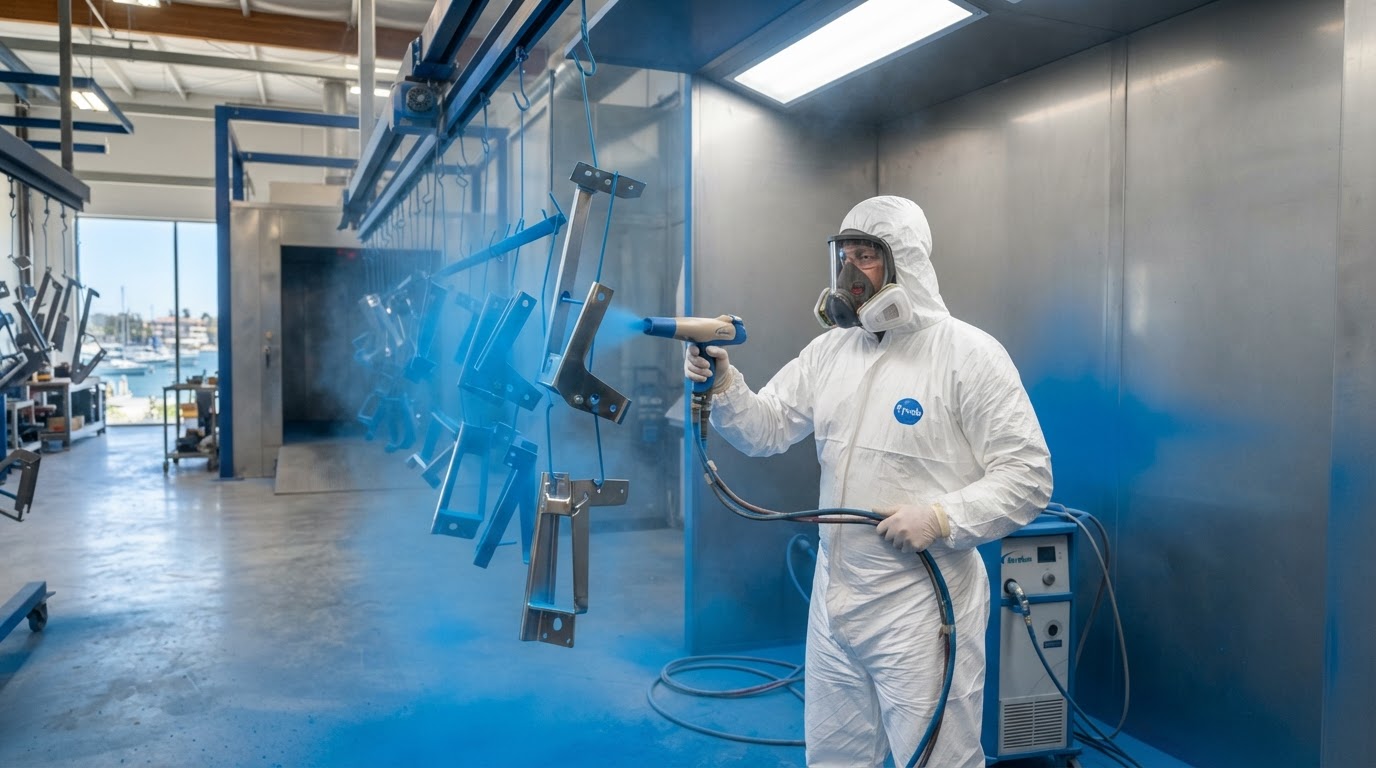
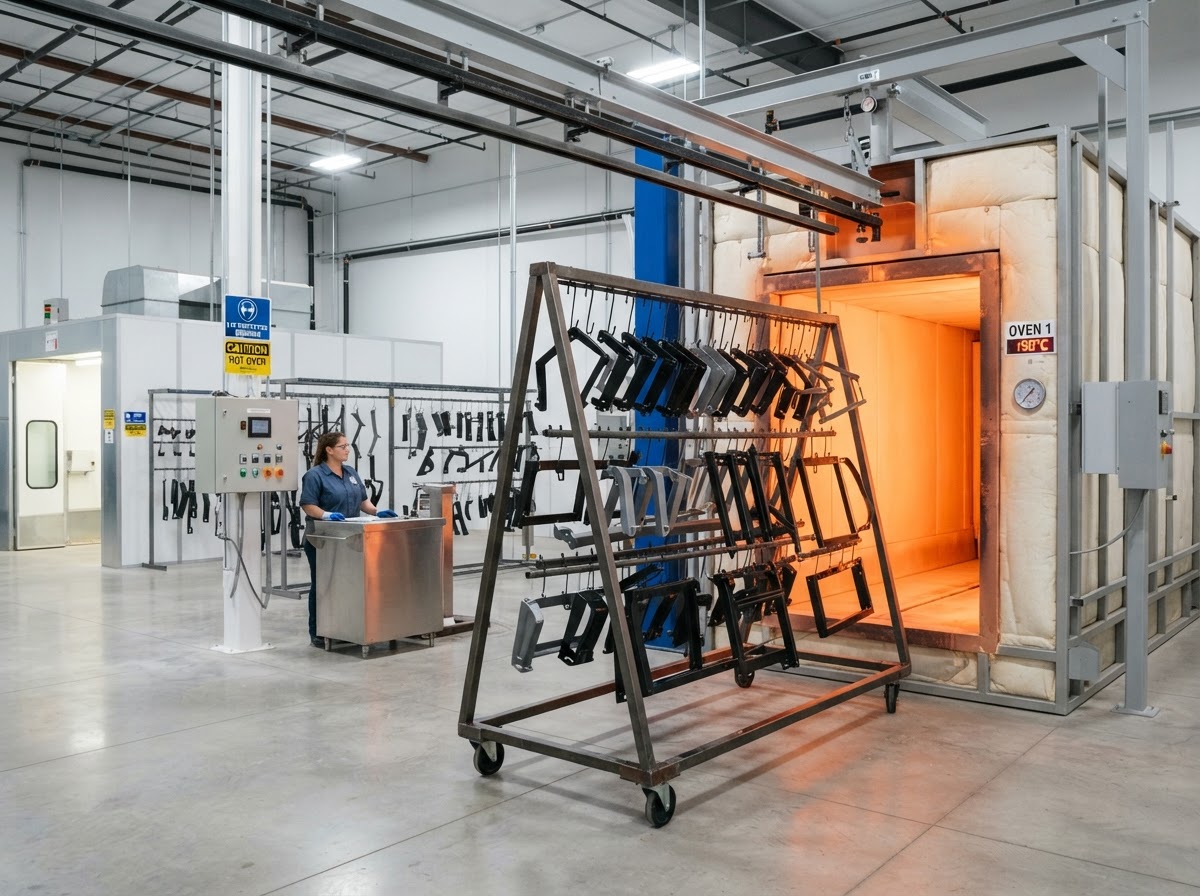
Powder coating is one of the most reliable ways to achieve a durable metal coating for both automotive parts and residential metalwork. Unlike liquid paint, powder coating uses an electrostatic spray process. The powder, usually a polyester powder or an epoxy-based blend, is given a static charge. The metal part is grounded. The powder clings evenly, even to complex shapes. Then the part goes into a curing oven, where the powder melts and cross-links into a hard, continuous film.
I recall a project for a local Pearland homeowner who wanted a custom railing for their front porch. They had tried a brush-on paint before, and it had chipped within two seasons. We sandblasted the old coating, applied a zinc primer to the steel, and then used a polyester powder with a matte finish. That railing has been through three summers of full sun and several tropical downpours. It still looks as good as the day we finished it. The combination of proper surface prep, a corrosion-resistant primer, and a UV-stable topcoat gave them a durable metal coating that actually performed.
For industrial equipment, the stakes are higher. A coating failure on a piece of machinery can mean downtime, lost product, or safety hazards. I have worked on hydraulic presses and conveyor systems where the coating had to resist chemicals, abrasion, and heat. In those cases, we often use an epoxy coating for its chemical resistance, topped with a polyester powder for color and UV stability. The curing oven temperature and time must be dialed in precisely for each metal thickness. Too hot, and the coating becomes brittle. Too cool, and it never fully cures.
Comparing Options: Powder Coating vs. Liquid Coatings
People sometimes ask whether a liquid paint or a powder coating is better for their project. The honest answer is that it depends on what you are coating and how you will use it. Liquid coatings can be applied with a brush or spray gun and can be easier to touch up. But they often contain solvents that evaporate, leaving a thinner film. Powder coating produces a thicker, more uniform layer without runs or drips. It also has no solvents, which is better for the environment and for the workers applying it.
That said, powder coating requires the part to fit inside a curing oven. For very large pieces of industrial equipment, that might not be practical. In those cases, a two-part liquid epoxy or a high-solids polyurethane might be the best durable metal coating option. But for most automotive parts, residential metalwork, and smaller industrial components, powder coating gives you the best balance of durability, appearance, and cost.
Real-World Durability Testing
I have done my share of durability testing over the years. Not in a lab with calibrated instruments, but in the field. We would coat a test panel, hang it on a fence facing the sun, and check it every few months. Salt spray tests are common in the industry, but nothing beats seeing how a coating handles real weather in the Houston Bay Area. The combination of heat, humidity, and UV is brutal. I have seen coatings that looked great in a catalog fail within a year on a boat trailer or an outdoor grill.
One thing I have learned is that a durable metal coating must include proper edge coverage. Sharp corners and edges are where coatings tend to pull away during curing. A good electrostatic spray setup helps, but so does rounding those edges during fabrication. When I work on cast iron pieces, like vintage engine blocks or decorative brackets, I always take extra time to smooth any sharp edges before sandblasting. That simple step prevents early failure.
Choosing the Right Coating for Your Project
If you are working on automotive parts like wheels, frames, or engine components, you need a coating that resists oil, grease, and road salts. A polyester powder with good chemical resistance works well. For industrial equipment, consider the operating temperature and exposure to chemicals. Epoxy coatings handle acids and solvents better than polyesters, but they can yellow in sunlight. That is why we sometimes use a two-coat system: an epoxy primer for protection and a polyester topcoat for color and UV stability.
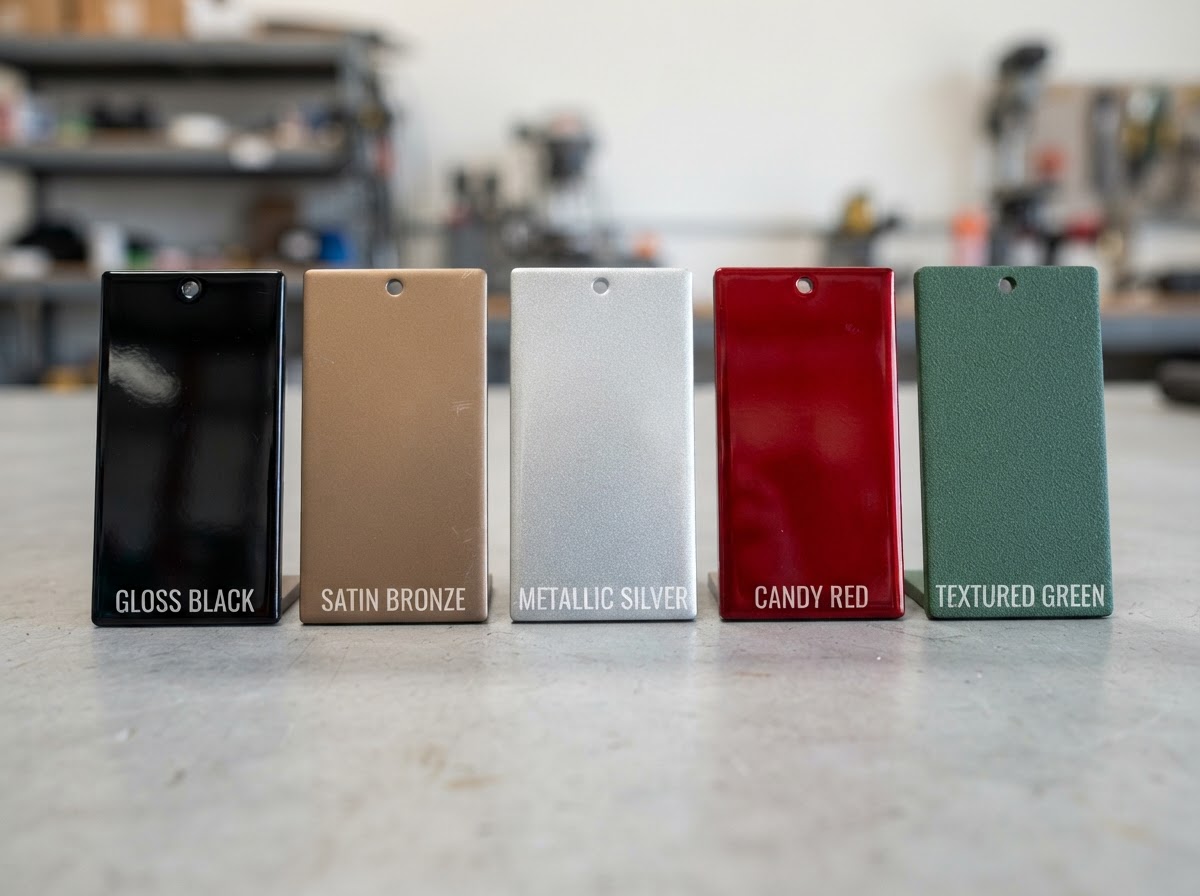
For residential metalwork, such as patio furniture, gates, railings, and light fixtures, the main threats are moisture and sunlight. A single-layer polyester powder with UV stabilizers is often enough. Color matching is also a priority here because homeowners want their new railing to match their existing trim or siding. Many powder coating shops, including ours in Pearland, offer a wide range of colors and can even custom-match a sample.
Cast iron requires special attention. Its porous surface can trap moisture. Sandblasting with a fine abrasive opens the pores and allows the coating to penetrate. A zinc primer followed by a durable metal coating like an epoxy or polyester powder gives excellent corrosion resistance. I have restored cast iron garden furniture that looked almost new after coating, and it has held up for years with minimal maintenance.
Aluminum parts, like boat railings or outdoor signs, benefit from a coating that is flexible enough to handle thermal expansion. Polyester powders have good flexibility, while some epoxies can be too rigid. For aluminum, I usually recommend a polyester powder with a UV-stable finish.
Final Thoughts on Long-Term Performance
Investing in a high-quality durable metal coating is about more than appearance. It is about protecting your investment in metal parts and equipment. A good coating can extend the life of a part by years, saving you money and hassle in the long run. In the Houston Bay Area, where the weather can be punishing, that is especially true.
Whether you are a homeowner in Pearland looking to refinish a gate or a shop manager responsible for industrial equipment, take the time to prepare the surface correctly. Choose a coating system that matches the metal and its environment. And work with a shop that understands the process from sandblasting through curing. The difference between a coating that fails in six months and one that lasts a decade is rarely the product alone. It is the craftsmanship behind it.